June 2019 - Techwinnews

Hot

Thursday, June 27, 2019

NSA Admits Improper Collection of Phone Data, 2nd Time Around

June 27, 2019 0
Civil Liberties Union on Wednesday released documents showing the United States National Security Agency improperly collected Americans' call and text logs in November 2017 and in February and October 2018.
The unauthorized collections occurred just four months after the agency announced it was deleting more than 620 million call detail records acquired since 2015 under Title V of the Foreign Intelligence Service Act.
The NSA relied on the improperly collected information from the February 2018 violation to seek approval from the Foreign Intelligence Surveillance Court to spy on individuals, the ACLU said.
The NSA later informed the court of the error, the ACLU noted, but there's no indication whether anyone was spied on unlawfully as a result, or whether the agency notified people improperly spied upon as required.
In October, the NSA again discovered it had obtained private information about Americans' phone calls in violation of Section 215 of the Patriot Act.
The agency stopped receiving data from the carrier involved but resumed accepting data after the carrier indicated it had resolved the problem, according to the ACLU.
The ACLU obtained the redacted documents by filing a Freedom of Information Act lawsuit against the Office of the Director of National Intelligence in December.
The 2015 USA Freedom Act, adopted in 2015 after Edward Snowden disclosed the NSA's surveillance activities, restricts the government's phone record program, noted Andrew Crocker, senior staff attorney at the Electronic Frontier Foundation.
"We've learned that the NSA has been entirely unsuccessful in working within these limits, leading to the continued collection of hundreds of millions of phone records, including many it was not entitled to under the law," Crocker told TechNewsWorld.

The Carriers' Fault?

The NSA blamed the renewed spying on carriers' mistakes, stating that technical irregularities led it to receive call detail records it was not authorized to obtain.
"We don't know what caused the NSA's egregious noncompliance," said Sandra Fulton, government relations director at Free Press.
"Broadly it seems to be the result of at least one carrier overproducing the amount of user data it is meant to give the agency, but within the system designed by the NSA, so the fault is on both sides," she told TechNewsWorld.
"While it is entirely possible there could be a sinister reason behind it, we've seen time and time again the nature of bureaucratic inefficiencies when dealing with large agencies," said Heidari Power Law Group attorney Yasha Heidari.
"Otherwise, I would expect a more evasive response -- and indeed, I would not believe we would even be hearing about this issue," he told TechNewsWorld.

Blame It on Technology

"Presented with a request for a particular population of numbers and associated dial information, you're going to capture a lot of extra stuff," said Michael Jude, program manager at Stratecast/Frost & Sullivan.
"Metadata is leaky," he told TechNewsWorld. "Even criminals and enemy agents make calls to local pizza places, and you have all that information captured in the metadata. I don't think technology is up to protecting people's privacy and call patterns."
The bigger question, Jude noted, is whether the NSA is using the data the way it should.

National Security's Sometimes Broad Brush

The NSA for years has fought calls for greater transparency on the grounds of national security.
It has not yet responded to a demand from six Democratic Party Senate Intelligence Committee members to release a public update on its mass phone data collection program, Free Press' Fulton said.
A court this spring dismissed the Electronic Frontier Foundation's lawsuit challenging the NSA's surveillance of Americans -- Jewel v. NSA -- on national security grounds. The EFF filed an appeal with the Ninth Circuit Court of Appeals.
The NSA this spring also recommended dropping the phone surveillance program, according to reports, because its logistical and legal issues outweighed any intelligence benefits. It apparently has quietly killed the program since then.

Demands for More Safeguards

The ACLU on Tuesday wrote the House Judiciary Committee urging it to end the NSA's Section 215 call detail record authority and to investigate and make public additional information about the agency's recent compliance violations.
The NSA may have replicated its collection of surveillance data under a different authority, ACLU Senior Legislative Counsel Neema Singh Giuliani speculated, and she urged Congress to prevent resurrection of the program.
She also suggested Congress do the following:
  • Let Section 215 of the Patriot Act expire at the end of the year as scheduled;
  • Pass additional reforms to halt large-scale surveillance being conducted under other Patriot Act authorities;
  • Strengthen existing First Amendment protections;
  • Limit how federal agencies can access and use information that's collected, and ensure they provide notice to individuals when information is used in criminal proceedings;
  • Close the backdoor search loophole inSection 702 of the FISA Amendments Act; and
  • Reform the FISC.
Meanwhile, Sens. Ron Wyden, D-Ore., and Rand Paul, R-Ky., and Reps. Justin Amash, R-Mich., and Zoe Lofgren, D-Calif., jointly introduced the "Ending Mass Collection of Americans' Records Act," S. 936 and H.R. 1942, in the Senate and House respectively.
S. 936 has a mere 4 percent chance of being enacted, according to Skopos Labs.
"This bipartisan effort to end the NSA's call detail record authority is a welcome sign and something that should be a no-brainer for Congress," ACLU spokesperson Abdullah Hasan remarked.
"We agree with the senators that broader legislative reforms to the NSA's surveillance authorities are needed," he told TechNewsWorld, "including limiting large-scale collection of data, preventing discrimination and First Amendment violations, and enhancing transparency
Read More

Wednesday, June 26, 2019

Chinese Hackers Linked to Global Attacks on Telcos

June 26, 2019 0
chinese hackers most likely are responsible for a years-long campaign targeting global telcos reported research firm cybereason
Security researchers on Monday reported that Chinese hackers are the likely perpetrators of a series of cyberattacks against telecommunications companies around the world.
The campaign, dubbed "Operation Soft Cell," has been active since 2012, according to Cybereason, an endpoint security company based in Boston.
There is some evidence suggesting even earlier activity against the telecommunications providers, all of whom were outside North America, the researchers said.
The attackers attempted to steal all data stored in the active directory servers of the organizations, including all usernames and passwords in the companies, as well as other personally identifiable information, billing data, call detail records, credentials, email servers, geo-location of users, and more, according to the report.
Based on the tools used in the attacks, such as PoisonIvy RAT, and the tactics, techniques and procedures deployed by the attackers, the campaign likely was run by APT10, a notorious group of Chinese hackers, the researchers pointed out.
The U.S. Justice Department last year indicted two members of APT10 for conspiracy to commit computer intrusions, conspiracy to commit wire fraud, and aggravated identity theft.
There is some solid evidence APT10 was behind the attacks, such as the way they customized PoisonIvy and the idiosyncratic bread crumbs they left behind, said Sam Curry, chief security officer at Cybereason.
"The way the customization is done, the way they write the scripts, is the sort of thing we've seen time and again," he told TechNewsWorld. "There's a high probability that it's a Chinese hacker."

Alarming Attack

The hackers attacked organizations in waves launched over a period of months, the report notes. During that time, they were able to map the target networks and compromise credentials. That enabled them to compromise critical assets -- such as production and database servers, and even domain controllers.
"Beyond targeting individual users, this attack is also alarming because of the threat posed by the control of a telecommunications provider," the report states. "Telecommunications has become critical infrastructure for the majority of world powers. A threat actor with total access to a telecommunications provider, as is the case here, can attack however they want passively and also actively work to sabotage the network."
The attack has widespread implications -- not just for individuals, but also for organizations and countries alike, the Cybereason researchers said.
"The use of specific tools and the choice to hide ongoing operations for years points to a nation state threat actor, most likely China," they wrote. "This is another form of cyber warfare being used to establish a foothold and gather information undercover until they are ready to strike."
There are similarities between Operation Soft Cell and another telecom attack, suggested Lavi Lazarovitz, a cyber research group manager at CyberArk Labs, an information security company based in Newton, Massachusetts.
"This widespread attack on telecommunications companies has similar characteristics to Operation Socialist," he told TechNewsWorld.
Operation Socialist -- a CIA and British GCHQ campaign revealed by Edward Snowden -- attempted to take control of the Belgian telecommunications company Belgacom.
"It leverages privileged accounts and probably shadow admins to allow persistency and control," Lazarovitz said.

Useful Information

Information reaped by campaigns like Operation Soft Cell can be invaluable to a foreign intelligence service, noted Jonathan Tanner, a senior security researcher at Barracuda Networks, based in Campbell, California.
"Tracking a target's daily routines alone can be useful for a number of motivations, ranging from enumerating contacts to asset recruitment, to abduction or assassination," he told TechNewsWorld.
That sort of work traditionally is carried out by surveillance teams, but with technology it's becoming increasingly easy to gain that information by other means with significantly less manpower, Tanner explained.
"The irony with this breach is that many carriers actually sell this data anyway, through third parties such as Zumigo, who then resell it without checking into their buyers backgrounds," he said.
Stolen data from telcoms can be valuable to more than just Chinese intelligence agencies.
"This type of attack would greatly help Huawei in their fight to control as much of the 5G space as possible," said Jonathan Olivera, a threat analyst forCentripetal Networks, a network security company in Herdon, Virginia.
"When a country like China relies on surveillance and intellectual property theft to keep its momentum going, it will be hard to stop and prevent expansion," he told TechNewsWorld.

Familiar Playbook

The breadth and persistence of the attacks aren't the only discouraging characteristics of Operation Soft Cell.
"This plays out like every other hack that we've heard about in a major organization for years and years and years," said Chet Wisniewski, principal research scientist at Sophos, a network security and threat management company based in the UK.
"It's clear that these big companies are not taking this stuff seriously enough, especially the ones that have sensitive information about us. The giant role these companies play in our lives demands that they take security more seriously," he told TechNewsWorld.
"The stuff that these guys did was stuff any skilled pen tester would do," Wisniewski said.
"The attacks didn't have any super secret stuff. There were no new zero-day vulnerabilities here -- no new tools that no one had ever heard of before. All the stuff was off the shelf. I could teach a college student to how to use it in a semester," he said.
"We know this playbook," Wisniewski added, "and big companies should be able to defend against it."

Cold War in Cyberspace

Campaigns like Operation Soft Cell are likely to continue without abatement, noted Satya Gupta, CTO of Virsec, an applications security company in San Jose, California.
"These attacks will continue for the foreseeable future, as long as there is political tension and unrest in any number of regions," he told TechNewsWorld. "Infrastructure attacks on all sides are trying to sow uncertainty, which has both political and financial value to the perpetrators."
As for China, it seems content with economic espionage, for the most part, but that could change in the future, too.
"As long as we're involved in trade wars, I'm not as worried as if China starts to feel threatened about its sphere of influence," said Richard Stiennon, chief research analyst at IT Harvest, an industry analyst firm in Birmingham, Michigan.
"If it's trade wars, China's target of interest will be the same as it's always been: economic espionage. If it's sphere-of-influence stuff, then the targets of interest could escalate dramatically," he told TechNewsWorld.
"We are essentially in a cyber cold war, and many of the same factors still apply regarding escalation of hostilities and the overall desire to avoid an actual war as a result of ongoing activities," Barracuda's Tanner added. "Countries will continue to push the boundaries, but a major increase in attacks runs the risk of being seen as an act of war, which no country wants.
Read More

Internet's Crowds Stunting Its Growth: Trends Report

June 26, 2019 0
although more people are connected to the internet the rate of growth is trending downward
More than half the world's population -- 3.8 billion people -- have access to the Internet and that may not be a good thing, at least for business, according to digital savant Mary Meeker's Internet Trends 2019 report.
Global Internet user growth has slowed to 6 percent year over year, down from 7 percent, noted the Bond Capital general partner.
Nevertheless, "there is still half of the world not connected to the Internet," said Ray Wang, principal analyst at Constellation Research.
The Asia-Pacific region leads in the number of Internet users and potential, accounting for 53 percent of Internet users despite just 48 percent penetration.
"As a market grows, growth rates tend to plateau at times as different waves of adapters migrate," said Rob Enderle, principal analyst at the Enderle Group.
"The Asia-Pacific, which is relatively underdeveloped, will have the greatest growth potential," he told the E-Commerce Times.
Privacy issues, breaches, and issues with social media also have created friction that impedes growth, which likely isreflected in the numbers, Enderle said.

E-Commerce Trends

Reaching nearly $140 billion, e-commerce sales accounted for 15 percent of retail sales in Q1 2019 versus 14 percent the previous year. There was a slight uptick in YoY sales growth from 2.1 percent in Q4 2018 to 2.4 percent in Q1 2019. However the growth rate in general has been spiraling downward, Meeker said.
E-commerce growth mirrored the trend in physical retail sales. The uptick in both cases could be due to disappointing sales over the holiday period. Retail sales in December were 1.2 percent lower overall than in November.
That was the largest slippage since 2009, and it led to widespread skepticism among analysts, with some suggesting sales were undercounted. Sales by non-store retailers, including online operations, fell 3.9 percent month-over-month in December.
The slippage in online sales could be attributed to a number of factors.
"Retailers like Best Buy, Target and Walmart are learning to fight back more effectively," Enderle observed. "Also, package theft and missed delivery are becoming bigger problems, and buyers are learning that it's often more convenient to just go to a local store for a lot of things."
Still, e-commerce has been gaining ground overall, accounting for 15 percent of retail sales in Q1 2019 vs. 14 percent the previous year.
"I think that demographically, you will see an uptick as the millennials reach their prime consumption years in the next five to 10 years," suggested Michael Jude, program manager at Stratecast/Frost & Sullivan.

Online Ads

Internet advertising spend increased 22 percent YoY from 21 percent YoY, Meeker said. Mobile ads showed most of the growth, a continuation of the trend begun in 2016.
However, quarterly Internet ad revenue on the leading U.S. platforms fell from 29 percent to 20 percent between Q4 2018 and Q1 2019.
"Too many channels," Jude told the E-Commerce Times. "Where do you place your advertising? If online is one channel, how do you place your advertising to best effect when there are other ways of reaching consumers? Also, competition is driving down prices as more online channels duke it out for share."
The slippage is due in part to advertisers "getting smarter at balancing the ad venues and learning how to better direct market to their customers using communications tools and in-band social networking efforts," Enderle suggested. "They are learning how to better target their spend."
That said, global ad revenues on U.S.-based ad platforms Google and Facebook, as well as Amazon, Twitter, Snap and Pinterest combined, is on an upward trend despite having dipped between Q4 2018 and Q1 2019 on all the platforms, according to Meeker.

The Impact of Mobility

Mobile devices accounted for 58 percent of site visits in 2018 by U.S. users, according to Stone Temple. Mobile devices accounted for 42 percent of time spent online.
More than 60 percent of global consumers shop online at least once a month, with the majority of them using a mobile device, according to an Episerver study of 1.3 billion Website visits. In some cases, more than 80 percent of sessions came through mobile devices on certain days.
However, consumers made more purchases using desktop computers -- 3.6 items per order compared to 3.3 items per order for tablet users and 2.9 items for smartphones.
Mobile ads showed the most growth despite the reduction in online ad revenue.
Also, "mobile ads, due to the real estate limitations, have far more limitations," Enderle remarked.

Going Digital

Digital media usage among U.S. adults grew 7 percent YoY, up from 5 percent, with the bulk of the growth coming from mobile users, Meeker said.
Meanwhile, voice-activated technology performed well, with the Amazon Echo installed base growing from 30 million in Q4 2017 to 47 million in Q4 2018.
Businesses "should realize that these voice-activated devices are digital storefronts they're locked out off," Enderle said. "Retailers "will either launch their own digital assistants or do what Microsoft's competitors did to that company, and use anticompetition laws to force Amazon and others to open up their platforms."
"A major push to change this dynamic" is likely within the next two years, he predicted.
This is "a battle of digital duopolies in every market -- from gaming, media, digital ads and cloud computing to social networks," Constellation's Wang told the E-Commerce Times.
"We will see a battle for time and attention," he said. "Screen time, engagement and usage are key."
Read More

Tuesday, June 25, 2019

Next-Gen Raspberry Pi 4 Packs Power Plus Potential

June 25, 2019 1
raspberry pi 4 could attract enterprise and iot users beyond its traditional educator and makers base
The next big Raspberry Pi thing is now here, with lots more computing power and more options.
The Raspberry Pi Foundation on Monday announced the availability of Raspberry Pi 4, a comprehensive upgrade that touches nearly every element of the computing platform.
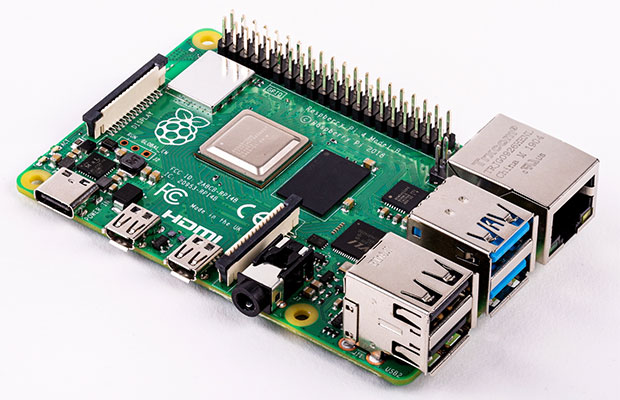
Raspberry Pi 4 offers users a choice of three memory capacities. The entry-level 1 GB RAM retains the signature US$35 price; 2 GB costs $45; 4 GB sells for $55. Prices exclude sales tax, import duty (where appropriate) and shipping.
All three variants launched on Monday. The foundation built more of the 2 GB variant than others and will adjust the mix over time to meet demands.
The upgrade to version 4 delivers a first-time PC-like performance while retaining the interfacing capabilities and hackability of the classic Raspberry Pi line, according to Eben Upton, Raspberry Pi cofounder and CEO of Raspberry Pi Trading.
The new features make it the most powerful version of Raspberry Pi to date, according to Charles King, principal analyst at Pund-IT. Mostly, it targets hobbyists, the maker community and educational use cases. This latest upgrade should open up new use case options and market opportunities for the operating system.
"The enhanced performance and functions allow the platform to compete more effectively with PC-class chips, including Intel Atom and Celeron. It could open doors for Raspberry and Arm among vendors developing IoT devices that are looking for alternatives to x86," King told LinuxInsider.

Faster Speed, Better Performance

The fourth-generation board is faster and more capable. It is dual-screen and 4K compatible. It delivers three times the processing power and four times the multimedia performance as the Raspberry Pi 3+ predecessor, according to the foundation.
The goal of the upgrade is to provide a rich computing experience with a balance of performance for most users at roughly one-tenth the cost of traditional desktop computer, said Upton.
"Raspberry Pi 4 is the first product we've produced that meets the performance level required to function as a general-purpose PC for the majority of users. It's a good fit for users who want to browse the Web, edit documents or watch videos," he told LinuxInsider.
Beyond the general purpose PC use case, extensive use is expected in media playback, such as set top boxes, as well as digital signage, industrial control and automation applications, Upton said. In education, it is used both in teaching young people about programming and in physical computing projects like robotics and weather stations.

Small-Sized Powerhouse

The credit-card sized Raspberry Pi computer board is available with the operating system software on its own without any accompanying attachments. It is also available as a complete kit that includes monitor, mouse, keyboard, SD card, power supply, cables and case for $120.
The new computer board and next-gen software positions Raspberry Pi to graduate from its largely hobbyist and educational user base to the workplace. Despite its primary target audience in education, the Raspberry Pi technology has grown in power over the years and become a huge hit with the wider Maker community, according to Simon Ritter, deputy CTO of Azul Systems.
"I've seen it used for pretty much everything you can think of, from robot control to maintaining a scoreboard for basketball to machine learning applications playing Minecraft," he told LinuxInsider.

Strong Competitor Rising

Raspberry Pi's massive increase in power will make it more appealing to users. The switch to a 64-bit processor and having a maximum of 4 GB of RAM make it capable of taking on really significant tasks, added Ritter.
"Adding two 4K displays, Gigabit Ethernet and USB 3 is incredible," he said.
Those new features could ensure the Raspberry Pi's suitability in the crowded field of Internet of Things workloads. Some people are pitching Pi as an effective platform for IoT development and deployments, noted Pund-IT's King.
There are numerous open source OSes designed for IoT workloads. They include ARM's mBed, Amazon's FreeRTOS, Contiki, and TinyOS. Plus, though they are not Linux distros, you cannot ignore Microsoft's Windows 10 IoT and WindRiver VX Works, he added.
"There have been a number of other development boards produced, but none seems to have been as big a hit as the Raspberry Pi," Azul's Ritter said.
Raspberry Pi is in a performance class of its own, maintained Upton. "We don't believe there is anything out there in the same price/performance class as Raspberry Pi 4."

Demand Will Tell

User demands for Raspberry Pi will grow as a result of the latest upgrade, Upton predicted. Increasing performance is the foundation's path to growing its user base.
"Raspberry Pi 4 has triple the performance of its predecessor, so we hope to see an increase in adoption," he said.
The way Raspberry Pi's developers pack so much computing power into such a small form factor without a fan and still keep the price point is phenomenal, noted Ritter.
That combination makes Raspberry Pi 4 viable for enterprise use. For example, Azul Systems already has a version of Java -- dubbed "Zulu" -- that runs on this device and supports the chip architecture and increased memory, Ritter noted.
"This will make it much easier for people to deploy existing Java applications straight onto these boards without code modification or recompilation," he pointed out.

New Design Details

The Raspberry Pi 4 board's looks are similar to previous $35 products. In fact, the design has changed very little since the original 2014's Raspberry Pi 1B+.
This new upgrade changes some of that internal appearance. It comes with a small number of essential tweaks to the form factor to accommodate new features.
For example, developers replaced the power connectors from USB micro-B to USB-C. This supports an extra 500mA of current and ensures a full 1.2A for downstream USB devices, even under heavy CPU load.
Another design tweak accommodates a dual display output within the existing board footprint. Developers replaced the type-A (full-size) HDMI video connector with a pair of type-D (micro) HDMI connectors.
Other connector changes occurred for Ethernet and USB devices. The Gigabit Ethernet magjack is now found at the top right of the board rather than at the bottom right. This simplifies PCB routing. The 4-pin Power-over-Ethernet connector remains in the same location so Raspberry Pi 4 remains compatible with the PoE HAT.
The Ethernet controller on the main SoC is connected to an external Broadcom PHY over a dedicated RGMII link to provide full throughput. USB is provided via an external VLI controller connected over a single PCI Express Gen 2 lane and provides a total of 4 GB per second of bandwidth shared between the four ports.
All three connectors on the right-hand si1. In all other respects, the connector and mounting hole layout remains the same. That ensures compatibility with existing devices and other accessories.

More Raspberry Features

New Raspbian software is available with the Pi 4 release. To support Raspberry Pi 4, the developers shipped a radically overhauled operating system based on the forthcoming Debian 10 Buster release.
The change to Debian 10 Buster brings numerous behind-the-scenes technical improvements. It also brings an extensively modernized user interface and updated applications, such as the Chromium 74 Web browser.
Pi 4 Highlights:
  • A 1.5GHz quad-core 64-bit ARM Cortex-A72 CPU (~3× performance)
  • 1GB, 2GB, or 4GB of LPDDR4 SDRAM
  • Full-throughput Gigabit Ethernet
  • Dual-band 802.11ac wireless networking
  • Bluetooth 5.0
  • Dual monitor support, at resolutions up to 4K
  • 4Kp60 hardware decode of HEVC video
  • Complete compatibility with earlier Raspberry Pi products

Upgrade Caution Issued

The developers suggest not rushing into Raspbian Buster without taking precautions. They recommend downloading a new image rather than upgrading an existing card.
This precaution ensures that the upgrade uses a clean working Buster system. For those who can not wait, be sure to make a backup first.
Also be aware that developers are retiring the legacy graphics driver stack used on previous models. Instead, Raspberry Pi 4 uses the Mesa "V3D" driver developed by Eric Anholt at Broadcom over the last five years.
The new video driver offers many benefits, including OpenGL-accelerated Web browsing and desktop composition, and the ability to run 3D applications in a window under X, according to the developers. It also eliminates about half of the lines of closed-source code in the platform.

New Raspberry Pi 4 Accessories Needed

Connector and form-factor changes bring with them a requirement for new accessories. These include users upgrading to buy a new Raspberry Pi 4 Case. One designed by partners Kinneir Dufort offers an all-new, two-part case priced at $5.

The official Raspberry Pi case for Raspberry Pi 4
$5 Raspberry Pi 4 Case

Another option to save some coin is to modify an existing Raspberry Pi case. Cut away the plastic fins on the right-hand side and omit one of the side panels.
Upgrading to the new Pi 4 board requires a new power supply. Good, low-cost USB-C power supplies (and USB-C cables) are surprisingly are hard to find, according to Upton.
Ktec developed a suitable 5V/3A power supply priced at $8. It is available in UK (type G), European (type C), North American (type A) and Australian (type I) plug formats, according to the foundation.
You can reuse a Raspberry Pi 3 Official Power Supply with an adapter to convert from USB micro-B to USB-C. The thick wires and good load-step response of the old official supply make this a surprisingly competitive solution if you do not need a full 3 amps, noted Upton.
Similarly, low-cost micro HDMI cables for the Raspberry Pi 4, which reliably support the 6Gbps data rate needed for 4Kp60 video, can be hard to find, he said. You can solve that problem with the Amazon Basics cable. Another option is a 1m cable available soon from the foundation's resellers for $5.

Silicon Upgrade Too

All of the Raspberry Pi products since the original Raspberry Pi in 2012 are based on 40nm silicon. Developers improved performance by adding progressively larger in-order cores (Cortex-A7, Cortex-A53) to the original ARM11-based BCM2835 design. That ended With BCM2837B0 for Raspberry Pi 3B+. The cost became prohibitive.
Raspberry Pi 4 is built around BCM2711, a complete re-implementation of BCM283X on 28nm. The power savings delivered by the smaller process geometry allowed Raspberry Pi developers to replace Cortex-A53 with the much more powerful, out-of-order, Cortex-A72 core. That design executes more instructions per clock and yields performance increases over Raspberry Pi 3B+ of between two and four times, depending on the benchmark.
That change allowed the developers to overhaul many other elements of the design. One key change is a move to a more modern memory technology, LPDDR4, to triple available bandwidth.
Developers upgraded the entire display pipeline, including video decode, 3D graphics and display output to support 4Kp60 (or dual 4Kp30) throughput. They also addressed the non-multimedia I/O limitations of previous devices by adding on-board Gigabit Ethernet and PCI Express controllers
Read More

Proposed Law Would Force Big Tech to Reveal Value of Consumer Data

June 25, 2019 0
bipartisan legislation seeks to compel tech companies to reveal value of harvested personal data
A Democrat and a Republican on Monday filed a U.S. Senate bill to require companies to report to financial regulators and to the public what consumer data they collect and how they leverage it for profit.
"When a big tech company says its product is free, consumers are the ones being sold," said Sen. Josh Hawley, R-Mo.
Hawley and Sen. Mark R. Warner, D-Va., introduced the Designing Accounting Safeguards to Help Broaden Oversight And Regulations on Data (DASHBOARD) Act.
"These 'free' products track everything we do so tech companies can sell our information to the highest bidder and use it to target us with creepy ads. Even worse, tech companies do their best to hide how much consumer data is worth and to whom it is sold," Hawley said. "This bipartisan legislation gives consumers control of their data and will show them how much these 'free' services actually cost."
Consumers are paying for free products with their data instead of with their wallets, Warner noted.
"The overall lack of transparency and disclosure in this market have made it impossible for users to know what they're giving up, who else their data is being shared with, or what it's worth to the platform," he said.
"Our bipartisan bill will allow consumers to understand the true value of the data they are providing to the platforms," Warner continued, "which will encourage competition and allow antitrust enforcers to identify potentially anticompetitive practices."
Scrollbi Ad

Power to Delete Data

Among the Dashboard Act's provisions:
  • Require commercial data operators -- defined as services with more than 100 million monthly active users -- to disclose the types of data they collect, as well as regularly provide their users with an assessment of the value of that data.
  • Require commercial data operators to file an annual report on the aggregate value of user data they've collected, as well as contracts with third parties involving data collection.
  • Require commercial data operators to allow users to delete all, or individual fields, of data collected, and disclose to users all the ways in which their data is being used, including any uses not directly related to the online service for which the data was originally collected.
  • Empower the U.S. Securities and Exchange Commission to develop methodologies for calculating data value, while encouraging the agency to facilitate flexibility to enable businesses to adopt methodologies that reflect different uses, sectors and business models.
Warner also has pledged to introduce a bill in a few weeks to require tech companies to make data collected from users portable so it can be moved easily from one platform to another, according to Axios, which first reported news of the Dashboard Act Sunday.
"If you have data portability, it could open things up quite a bit," said French Caldwell, CFO of The Analyst Syndicate, an IT research and analysis group based in Washington, D.C.
"It would allow you to easily move your data from a player like Facebook to a new competitor," he told TechNewsWorld.
How easy -- or frictionless -- the companies will make it to move data among platforms will be a thorny issue should the bill become law.
"I doubt it's going to be made real easy to do," Caldwell said.
What's more, portability can only have an impact on the competitive landscape if there are competitors to take the data to.
"Many of the large tech companies effectively purchase their competitors," observed Kendra Albert, clinical instructor at the Cyberlaw Clinic at Harvard University's Berkman Klein Center for Internet & Society in Cambridge, Massachusetts.
"Data portability is all well and good and could foster competition, but it doesn't work if there are no effective competitors in the market because they keep getting purchased by the larger companies," Albert told TechNewsWorld.

Wrong Assumptions

More information about how companies gather data would provide greater benefit to consumers than how much money they make off it, Albert also noted. "Knowing what your data is worth doesn't get you much when there's effectively no competition in particular services."
The idea that consumers are getting a rotten deal when they give up their data for free services is wrong, maintained Daniel Castro, director of the Center for Data Innovation of the Information Technology and Innovation Foundation, a research and public policy organization in Washington, D.C.
"While data may have value, 'paying' for a service with data is not the same as paying with money," he explained.
"Unlike money, consumers do not have less data after sharing personal information, and they can share that same data with other services as well," Castro pointed out. "On the contrary, for most commercial services, consumers always come out ahead by sharing data in exchange for a free service."
The legislation would make companies go through an expensive process of trying to assign a value to each user, an activity that almost certainly would irritate consumers -- even if required by the government.
"In no other sector does the government require businesses to reveal which customers are most valuable to them," Castro said. "Further, if Congress wants to require this disclosure, it should extend it to businesses of all sizes, as well as political campaigns."
Provisions in the proposed law that direct the SEC to develop a methodology for calculating data value, its sources for data collection, and how the company safeguards the data "are all reasonable and should be the basis for any bill that moves forward," he added.

The Value Hangup

As things stand now, the tech companies know the value of the data they're collecting and consumers don't know that value, said Rob Enderle, principal analyst at the Enderle Group, an advisory services firm in Bend, Oregon.
"Typically, when one side knows the value of something and the other side doesn't, then the side that doesn't know the value of that thing gets cheated," he told TechNewsWorld.
The problem with this bill is the companies will be doing the valuations, and "there's nothing to stop the company from undervaluing the asset," Enderle said. "This bill needs a stronger process for setting the value of information so it does not excessively advantage the vendor."
However, the chances of the bill becoming law are low, he predicted. "Congress doesn't know enough about these issues, and when people don't know enough about something, they're likely to hold to the status quo."
However, the bill could be arriving at a good time, Caldwell said, noting that "concerns about privacy and the power of big tech are higher than ever right now.
Read More

6 Things We Won't Be Able to Live Without in 2035

June 25, 2019 0
drones self-driving cars and ai will create demand for new technology innovations
I'm giving myself extra wiggle room because we know things rarely happen as fast as we think or progress as slowly as we hope. We all thought we'd have flying cars by the end of last century, for instance, but we are due to be up to our armpits in them by the end of next decade if the impressive number of trials continue to go well.
I'll close with my product of the week: my favorite laptop.

1. Drone Drop Spots

I touched on the drone drop issue a little last week, and I have been thinking about it ever since. With the advent of drone deliveries, we need a safe place to drop packages. For homes, the roof would be best because it generally has clear airspace above, it is sturdy in case the package drops prematurely, and it is a ton more secure than a driveway, lawn or porch.
It's also far safer than trying to get a drone to land on a balcony or navigate through an open window (and safer for pets as well, because none of us want to come home to a pet injured by a drone or as a result of tying to catch one).
The best companies to do this would be firms that already know how to penetrate the roof safely. I'm thinking firmslike Solatube, because the product could be as simple as a roof-mounted chute that would curve and have water drainage at the low point. This would allow the package to roll down to a padded area in an insulated chute arriving in a secure holding area where your package(s) would be safe until you returned.
Multitenant buildings could have tenant-only accessible areas with cameras on the top floor where packages could be picked up.

2. Autonomous Ride-Sharing Car Harbor

Autonomous cars are in the works to take the place of services like Uber and Lyft -- but where will these cars go to standby and charge? (Most likely will be electric.) If they haven't already, I have no doubt that the firms thinking of building out this solution will realize that parking structures may become a competitive advantage and will start buying up and retrofitting them for this use.
The firm with the most local cars likely is going to get the most riders in a region, and firms that don't have their own parking may find themselves banned from cities trying to control traffic and limit bad behavior, like double parking, at scale.
Cars will go in, charge, and then deploy as needed, staying off the street when they don't have riders except on the way to pick them up or return from dropping them off. These standby, charging and wait points will be critical to the success of the autonomous ride-sharing car effort.

3. Autonomous Plane Sky Harbor

A bigger problem is the coming group of autonomous flying vehicles. They can't use existing structures, except maybe on roofs, and those won't handle the kind of volume traffic that Uber likely anticipates with its coming service.
For these you'll likely need purpose-built structures that safely can receive and then deploy these autonomous flying vehicles, which some mistakenly call "flying cars." (If it just flies, it isn't a "car" -- it is something else.)
Given the limited range of these things and the necessary safety envelope for that range, bringing them in from remote areas would both reduce the benefit of timeliness and increase the chances of a catastrophic failure in transit massively, as well as lower the time in service for the vehicles.
Flying vehicles likely will need a storage/charging area kind of like aviaries. One source of inspiration for builders could be Japanese science fiction anime. Its artists have been particularly creative with this problem. (This clip is pretty amazing.)

4. Autonomous Traffic Control

There are going to be some interesting problems with autonomous vehicles at scale that peer-to-peer navigation can't address. What happens, for instance, if a passenger has a medical emergency, or if a vehicle gets hacked or goes rogue due to some technical problem?
A centralized deep learning artificial intelligence could take control of the vehicle, fire up and look through its interior and exterior sensors, and mitigate the risk, but initially it is likely that a human will be called on first do the job and then oversee it to make sure the AI makes the right decisions.
However, I truly doubt that human dispatchers, given the historic problems and delays surrounding this limited resource, will be able to act both fast enough and comprehensively enough.
For instance, say a man decided to go from San Francisco to LA and sleep in the car. On the trip he has a heart attack. Sensors in the car would need to pick that up -- otherwise it's going to arrive with a dead passenger. The car would need to be redirected, given a priority lane, and taken to max speed while an emergency response was scrambled. Closing speeds could exceed 300 Miles per hour (EMTs and the vehicle going in opposite directions), putting response within around 10 minutes from most anyplace in the country. That's one scenario.
Realize that autonomous vehicles would be excellent explosive delivery platforms, too, and the related threat would need to be identified and mitigated in seconds, particularly if it should involve an autonomous flying vehicle (a poor man's cruise missile).
Some central service is going to need to coordinate responses across a variety of services and resources at computer speeds, once a problem is identified.

5. Biometrics Identity-Theft Protection

I get a kick out of efforts to try to protect people from privacy violations by limiting facial scanning. The thing is, if your picture is up someplace on social media, chances are it already has been scanned and linked to personal data. Those cows not only have left the barn -- they have left the state, so closing that barn door likely will not do any good.
In a recent case, a college student was arrested because someone stole his credit card number and the system identified the crook's image with the student's name, connected the student -- rather than the crook -- to a number of crimes.
Right now, there is no easy way even to find out if you are misidentified in the criminal identification systems, let alone fix the problem. Credit monitoring services like Experian help address stolen digital identities. We will need them to expand (the likely path) to biometric hacks, or we'll have to wait for new services focused on the compromise and correction of misidentified biometric data. Otherwise a lot of us wrongly will end up on no-fly lists or arrest site lists.
Realize there is a pretty good chance that while the systems in place can recognize that they have connected the wrong image to the name, their fix might be only to disassociate the image, not correct it. They would fix the picture but still associate you with the crime.

6. AI Life Manager

We are quickly getting to the point when all the services we subscribe to are becoming an unmanageable and exceedingly expensive. You probably have several music and video streaming services (I do) with overlapping and redundant libraries; identity protection services provided by your credit card companies and third parties; service contracts from different providers on your appliances and vehicles that might be more cheaply handled by one firm; and insurance from a variety of vendors, none of which will protect against your next most likely claim.
Managing our lives has become like managing a company. With little or no training, you may be getting overwhelmed by all the services -- many, if not most, of which you rarely or never use, and may never need.
This suggests we soon will need an overarching service that helps us optimize our spend, makes sure we have what we need when we need it, without massively overspending for things we'll never need, and that understands our goals and works to further them.
This service could handle commitments like taxes, aggregate alerts, and provide direction regarding what to do with them, ensuring our piece of mind without requiring we commit our mental resources to these ongoing issues. Basically, we'll need our digital assistants to grow up and be like Tony Stark's Jarvis.

Wrapping Up

This is likely only the tip of the iceberg, because we quickly will be surrounded by increasingly intelligent products -- some that have our best interests at heart and some that want to scam us.
The issues with deep fakes, fishing by increasingly intelligent systems, the proliferation of smart robots, and redundant services will continue unabated. In a few short years we are going to need to deal with these changes in more than the existing ad hoc fashion, and actually get ahead of problems like what to do with dormant autonomous vehicles, and where to allow drones to drop the packages they deliver safely and securely?
We have tons of disruptive products and services, but few are doing gap analysis to figure out what new things will be critical to this new world. I've listed six, but I'll bet you can think of more. The next Bill Gates or Elon Musk likely is working on one or more of these things already. What are you working on?

I made the HP Spectre Folio the product of the week when I first got it several months back, but I realized last week that it is by far my favorite notebook computer. I have notebooks from all the major vendors but, while not yet perfect, the Folio has become the one notebook I grab most often.
This is because it morphs into a usable tablet, a great movie player on planes (thanks to Movies Anywhere) and a decent e-book reader, and it is always connected. I find that often I can leave my backpack, charger and Kindle Fire tablet behind and just carry this laptop, which has been doing wonders for my back. (My backpack, loaded, is impressively heavy.)

HP Spectre Folio convertible PC
HP Spectre Folio

There are some things I'd like to see improved. It now comes in brown and burgundy (the 70s would likely their colors back) and I'd prefer black. I'd prefer that it use the Qualcomm Always Connected platform for longer battery life (or have a charger that's easier to pocket), and that it have a higher nit (more light) screen for outdoor use.
Even without these corrections, this leather-covered baby is just a ton easier and better to carry than any other product I currently have access to.
For instance, I had to do a day trip to San Francisco last week. I was in coach on a small jet, but I could cantilever the screen so that I could watch movies, while the poor woman next to me was trying the same thing on her little smartphone. I flipped it to the side to read for a while in tablet mode, and when needed, I was able to catch up with email and do research on the Web while in 4G cellular service.
Now I know a number of my peers have come to love this thing as well, and that is pushing the other OEMs to create similar products that potentially are even more advanced (and probably will come in black rather than burgundy). However, until then the HP Spectre Folio is my favorite and my product of the week. This thing is AWESOME! 
Read More

Sunday, June 23, 2019

Apple Highlights User Experience in New OS Lineup

June 23, 2019 0
apple's ios 13 preview at wwdc included new photo tools dark mode and private sign in
Apple dangled the next versions of iOS, macOS and watchOS before developers' eyes during Monday's keynote event at its World Wide Developers Conference in San Jose, California.
In this round of operating system upgrades, Apple seems focused on improvements.
"They're polishing a number of aspects of the operating systems, " said Ross Rubin, principal analyst at Reticle Research, a consumer technology advisory firm in New York City.

"They're breaking out the iPadOS into it's own code base," he told TechNewsWorld, "and continuing a path toward autonomy for watchOS."
More than anything else, Apple has been about the user experience, observed Tuong Nguyen, senior principal analyst at Gartner, a research and advisory company based in Stamford, Connecticut.
"A strong part of that was technological innovation," he told TechNewsWorld. "This year it was about improvements and adopted features -- features like Swipe, Dark Mode and Desktop Browsing that have existed on other platforms for quite some time."
"A lot of iOS 13 is just playing catch-up with Android, which was way ahead of Apple in certain areas," said Bob O'Donnell, chief analyst at Technalysis Research, a technology market research and consulting firm in Foster City, California.
"It was great to see the improvements in Maps, but that was really playing catch-up," he told TechNewsWorld.

IOS 13 Tweaks

Among the changes coming to the next version of Apple's iOS mobile operating system is an improved Maps app. It has broader road coverage, better pedestrian data, more precise addresses, and more detailed land cover, as well as a new "Look Around" feature that allows you to experience a location at street-level.
"For years, Apple Maps has lagged significantly behind Google Maps in terms of features, functions and local details," said Charles King, principal analyst at Pund-IT, a technology advisory firm in Hayward, California.
"The new enhancements discussed at WWDC should be a welcome relief to both Apple developers and customers," he told TechNewsWorld.
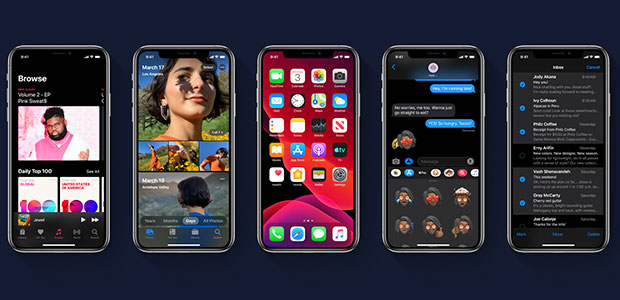
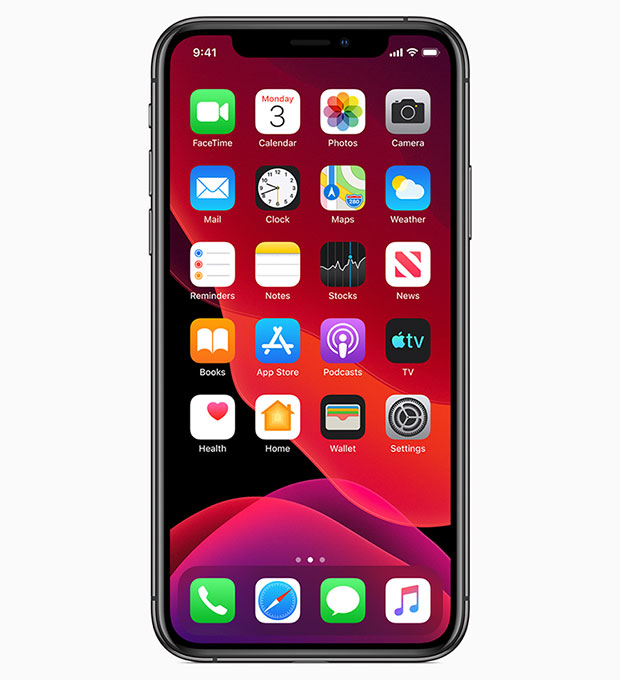
Apple has added a new "Dark Mode" in iOS 13 too. It's especially useful in low-light conditions. What's more, Apple has opened it up to developers so they can use it in their apps.
Apple iOS 13, iPhone XS
Embracing Dark Mode across its platforms could be an indicator of where Apple is headed with its display technology, observed Wayne Lam, principal analyst for mobile devices and networks at IHS Markit, a research, analysis and advisory firm headquartered in London.
"If they're going to go with Dark Mode, the best type of display is going to be an OLED display," he told TechNewsWorld, "so it suggests that their 2019 product line will be all OLED displays."
Apple also beefed up Photo apps in the new operating system. The photo software uses on-board machine learning to curate a photo collection, making it easier to relive moments by day, month or year.
Photo-editing tools are more accessible, and they incorporate sliders for application of effects. In addition, users can apply editing effects to video.
Portrait mode is accessible directly in the camera app. New features let you move your light source in and out on a subject to change the ambiance of a shot. There's also a "High-Key Mono" effect for creating distinctive monochromatic portraits.

New Kind of Sign In

iOS 13 will come with a new way to sign on to apps and websites. Instead of using a social ID from Facebook or Google, you can use your Apple credentials to sign in.
The new offering, called "Sign in with Apple," lets you use a biometric -- face or fingerprint -- to log-in to an app or site. The feature has two-factor-authentication built in for an additional layer of security.
Apple also announced a new iOS-based operating system for the iPad.
"The new iPadOS and related features will be a boon to iPad users, especially those who depend on the device for productivity applications," Pund-IT's King said.
"The new features and functions will also allow the iPad to compete more effectively against commercial laptops, a market that Apple desperately needs to crack," he added.
For years, the iPad has been emulating the user interaction of the iPhone, explained IHS Markit's Lam, but with features like multi-windowing and the use of keyboards and mice, the platform is becoming more sophisticated.
"Most surprising of all was a feature buried in the Accessibility settings -- support for wired or Bluetooth mouse devices," King said.
"That wasn't mentioned on stage and since the feature was reported, Apple and supporters have reportedly tried to downplay its importance," he continued, "but taken in concert with these other new iPadOS features, it seems obvious that Apple is finally coming to grips with the iPad's greatest shortcomings -- all related to its lack of common, valuable functions that PC owners enjoy every day."

macOS Catalina

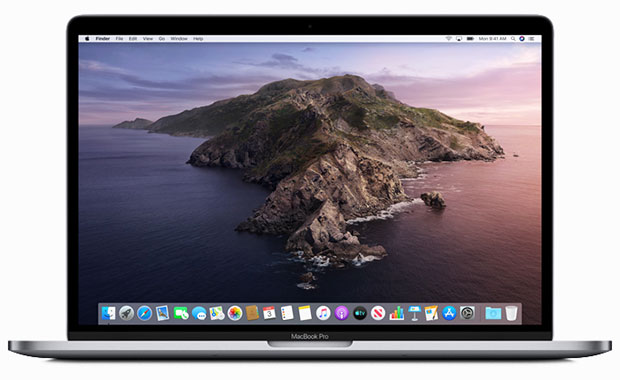
Apple departed from previous naming conventions with the next release of macOS. Called "Catalina," it will be able to run iOS apps thanks to Project Catalyst, formerly known as "Marzipan."
macOS Catalina
The code-named 'Marzipan' tool makes it easier to port iOS apps onto the Mac, which allows developers to sell on iOS and Mac App Stores without reconfiguring their apps," Loup Ventures analyst Gene Munster observed in a research note.

"Catalyst is pretty cool," said Jack E. Gold, principal analyst at J.Gold Associates, an IT advisory company in Northborough, Massachusetts.

"It's going to get a lot of interest because there's a lot iOS apps out there that people want to run on other devices," he told TechNewsWorld.

With Catalina, Apple is retiring iTunes and replacing it with three new apps: one for music, one for podcasts, and one for TV shows and movies.

Apple also has added a feature called "Sidecar" that lets you use an iPad as a second display or a drawing tablet.

Apple also showed the WWDC crowd a new voice-control app for Catalina that allows users who are unable to operate a computer with traditional devices to control it with their voice. Through a system of labels and grids, users can interact with virtually any app using comprehensive navigation tools.

watchOS Moves Out

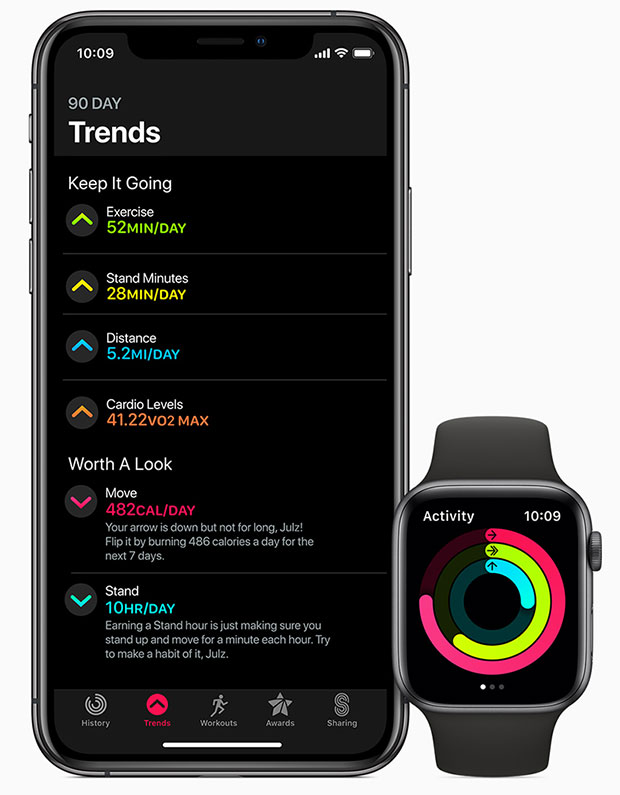
Apple watchOS 6, iPhone Watch Trends
With the next version of watchOS, Apple Watch will get its own App Store and users will be able to download apps without the assistance of the iPhone.

"The ability to get apps separately is a big deal," Technalysis' O'Donnell said. "To me, it's the first sign of making the watch independent completely and potentially have it work with other platforms."

A separate watchOS could be good for the watch's ecosystem, too.

"The use cases for the Watch have long been debated, due in part to consumers not being aware of the available watchOS apps," Munster wrote. "We believe an App Store on the Watch will increase consumer awareness."

"Increased awareness will drive developers to create more and better Watch-based apps and the Watch should become more useful over time," he continued. "This should have the small effect of increasing demand for Apple Watch, which now accounts for about 5 percent of Apple's revenue."

Apple also announced some new apps for watchOS, including Cycle Tracking, which allows women to log important information about their menstrual cycles, and Noise, an app that tracks sound levels that could be damaging to a user's hearing. 
Read More

Post Top Ad

tamiltechnologywin